
Introduction
Leg swelling is often dismissed as a minor issue caused by prolonged standing or fatigue. However, when swelling affects only one leg, it may signal an underlying vascular condition that requires attention.
Understanding when leg swelling is harmless — and when it is not — can help prevent serious complications.
What Is Deep Vein Thrombosis (DVT)?
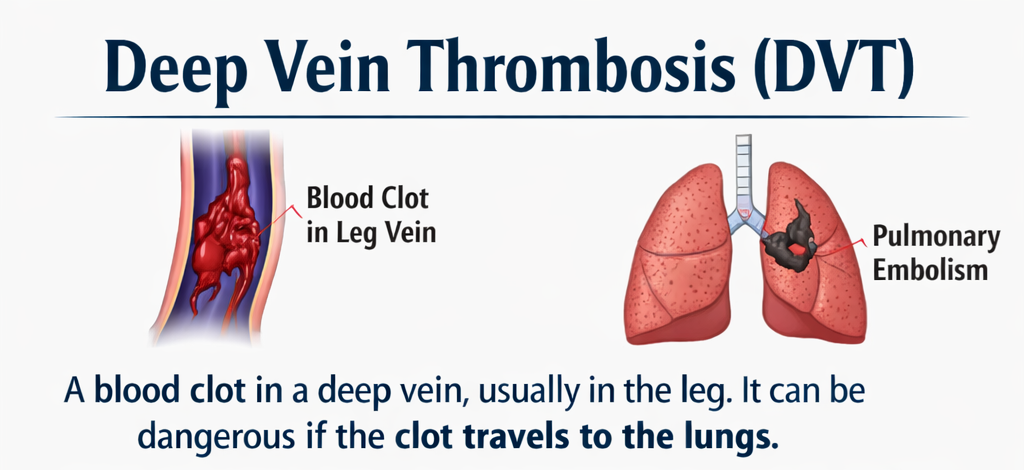
Deep Vein Thrombosis occurs when a blood clot forms in a deep vein, most commonly in the legs. This clot can partially or completely block blood flow.
While DVT may sometimes present with mild symptoms, it carries potential risks if not detected early.
Why DVT Can Be Serious
If a clot dislodges, it can travel to the lungs, causing a pulmonary embolism — a potentially life-threatening condition. This is why early identification of DVT is critical.
Common Warning Signs of Deep Vein Thrombosis
1. One-Sided Leg Swelling
Swelling typically affects one leg rather than both.
2. Pain or Heaviness
Discomfort may worsen while walking or standing.
3. Warmth or Redness
The affected leg may feel warmer or appear discolored.
These symptoms warrant prompt medical evaluation.
Role of Ultrasound in Early Diagnosis
Venous Doppler ultrasound is a non-invasive imaging technique that visualizes blood flow in the leg veins. It helps detect clots accurately and quickly, guiding further clinical management.
From a radiologist’s perspective, ultrasound is a safe and effective first step in evaluating suspected DVT.
Radiologist’s Expert Perspective
As a Radiologist, my focus is on early and accurate diagnosis. Imaging plays a vital role in identifying vascular conditions before they progress, enabling better patient outcomes through timely care.
Conclusion
Not all leg swelling is harmless — especially when it affects only one leg. Recognizing warning signs and seeking early medical evaluation can prevent serious complications.
To learn more about vascular imaging and patient education, visit
👉 www.drvrishitsaraswat.com