
Interventional Radiology (IR) is one of the fastest-growing fields in modern medicine. It offers minimally invasive treatments using medical imaging technologies — without the need for large surgical incisions. With shorter recovery time, reduced pain, and lower risks, Interventional Radiology is transforming patient care across the world.
In this article, we’ll explain what Interventional Radiology is, how it works, who performs it, what conditions it treats, and why it is becoming a preferred alternative to traditional surgery.
What is Interventional Radiology?
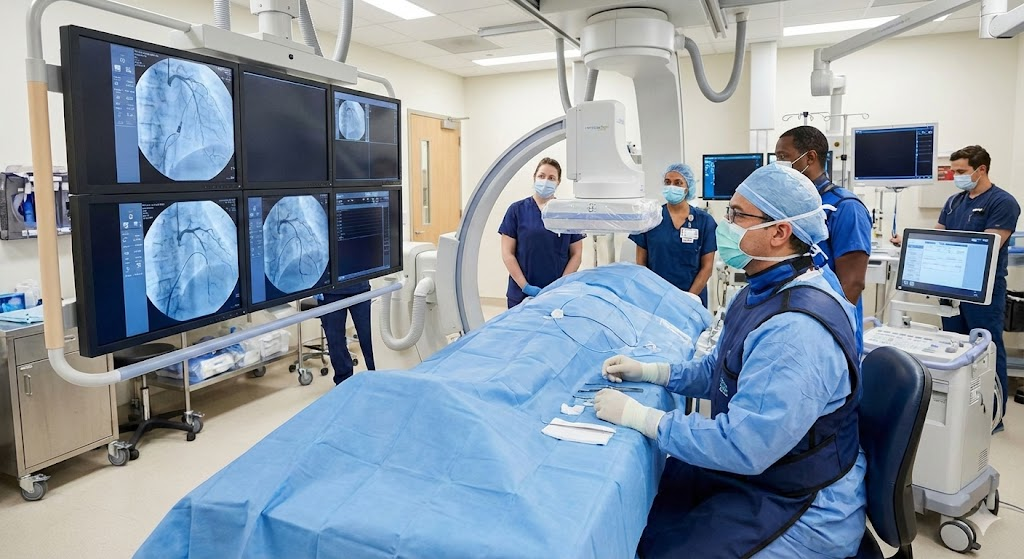
Interventional Radiology is a medical specialty that uses real-time imaging guidance—such as Ultrasound, CT scan, Fluoroscopy, and MRI—to diagnose and treat various diseases.
Instead of open surgery, IR procedures involve a tiny needle puncture or catheter, making them minimally invasive and safer.
How Does Interventional Radiology Work?
IR specialists use advanced medical imaging to guide very thin instruments like catheters, wires, and needles inside the body. These instruments help to deliver targeted treatment exactly where it’s needed.
Example:
Instead of performing open surgery to treat a blocked blood vessel, an IR doctor may insert a catheter and open the blockage using a tiny balloon or stent — all without major incisions.
Who Performs These Procedures?
These procedures are performed by Interventional Radiologists—highly trained medical doctors who specialize in image-guided minimally invasive treatments. They undergo:
- MBBS
- Radiology specialization (MD/DNB)
- Super-specialized IR training (fellowship or DM)
Conditions That Can Be Treated
Interventional Radiology treats a wide range of conditions, including:
- Varicose Veins
- Uterine Fibroids
- Liver Tumors & Cancer Therapies
- Deep Vein Thrombosis (DVT)
- Kidney and Gallbladder Drainage
- Arterial Blockages
- Prostate Enlargement (BPH)
- Thyroid Nodule Ablation
- Joint Pain Relief (Arthritis)
Why Patients Prefer This Method
| Feature | Traditional Surgery | Interventional Radiology |
| Incision | Large cut | Pin-hole entry |
| Pain | Moderate–High | Minimal |
| Hospital Stay | 3–7 Days | Same day or 24 hours |
| Recovery Time | Weeks–Months | 1–7 Days |
| Scarring | Visible | Almost invisible |
Safety and Recovery
Yes. IR procedures are performed with advanced imaging precision, reducing surgical risks such as bleeding, infection, and anesthesia complications.
Most patients can return home the same day and resume normal activities within a short period.
When Is It Recommended?
Doctors recommend IR when:
- Surgery is risky
- Patient prefers minimally invasive options
- Faster recovery is needed
- Targeted treatment is beneficial
IR is now widely used in hospitals, cancer institutes, and advanced medical centers.
The Future of Medical Care
With advancements in robotics, AI-guided imaging, and precision medicine, Interventional Radiology is expected to become the future standard for many treatments — replacing major surgeries with safer, faster, and patient-friendly alternatives.
Final Thoughts
Interventional Radiology offers a modern, minimally invasive alternative to traditional surgery, providing effective treatment with fewer complications and faster recovery. Whether for vascular disease, cancer care, or organ-specific conditions, IR continues to change the way healthcare is delivered.