
Introduction to Coiling & Stenting
When it comes to brain and vascular health, timing and precision can make all the difference. Over the past decade, Coiling & Stenting in Lucknow has emerged as a trusted, minimally invasive solution for treating complex neurovascular conditions like brain aneurysms and arterial blockages. Instead of large surgical cuts and long hospital stays, these procedures use cutting-edge imaging and tiny instruments to fix life-threatening problems from inside the blood vessels.
Sounds futuristic? It is—but it’s also happening right now, closer to home than many people realize.
Why Coiling & Stenting Are Game-Changers in Brain Care
Think of your blood vessels like highways supplying fuel to a busy city (your brain). If a road weakens or gets blocked, chaos follows. Coiling and stenting are like smart civil-engineering fixes—reinforcing weak spots and reopening blocked routes without tearing down the entire road.
That’s why doctors increasingly prefer these techniques. They reduce trauma, speed up recovery, and dramatically lower complication risks compared to traditional brain surgery.
Understanding Brain Aneurysms and Blocked Arteries
What Is a Brain Aneurysm?
A brain aneurysm is a weak, bulging area in a blood vessel wall. Over time, pressure causes it to balloon out—much like a worn-out tire. If it ruptures, it can lead to sudden brain hemorrhage, stroke, or even death. Many aneurysms stay silent until they become dangerous, which makes early diagnosis critical.
What Causes Arterial Narrowing or Blockage?
Arterial narrowing usually results from plaque buildup, blood clots, or vessel damage. When blood flow to the brain drops, symptoms like dizziness, weakness, speech difficulty, or stroke may occur. Stenting helps restore smooth blood flow and prevents future blockages.
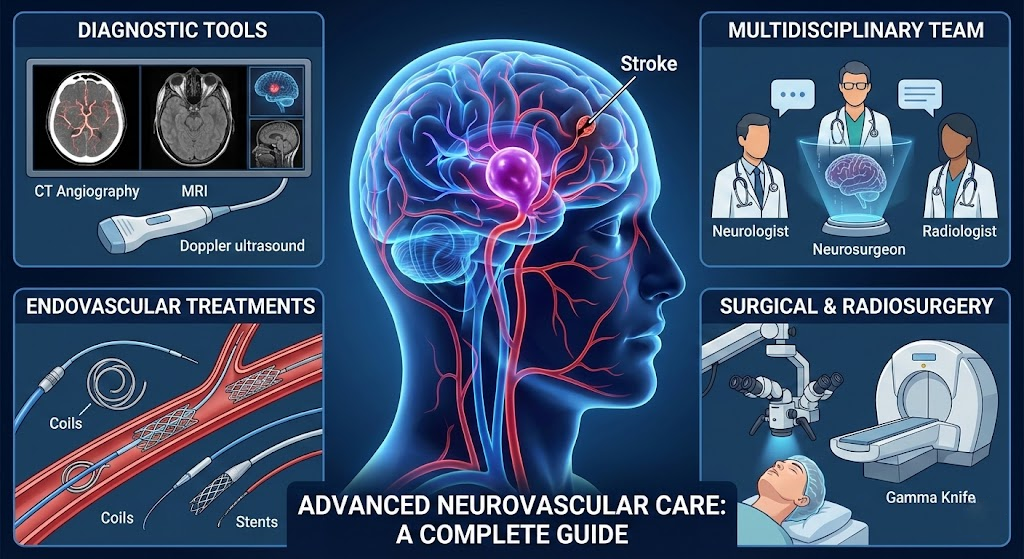
What Is Coiling?
Coiling is a minimally invasive procedure used mainly to treat brain aneurysms. Instead of opening the skull, doctors guide a thin catheter through an artery—usually from the groin or wrist—straight to the aneurysm.
Types of Coils Used
- Platinum coils
- Detachable coils
- Hydrogel-coated coils
Each type is designed to safely fill the aneurysm and stop blood from entering it.
How Coiling Works Step by Step
- A catheter is navigated to the aneurysm under live imaging
- Tiny coils are released into the aneurysm sac
- The coils trigger clot formation
- Blood flow into the aneurysm stops, preventing rupture
Simple idea. Powerful results.
What Is Stenting?
Stenting is often used when arteries are narrowed or when coils need support to stay in place.
Types of Brain Stents
- Self-expanding stents
- Flow diverter stents
- Balloon-assisted stents
How Stenting Supports Blood Flow
A stent acts like scaffolding inside the artery. It holds the vessel open, maintains proper blood flow, and reduces the risk of future blockage or aneurysm growth.
Coiling & Stenting in lokhnow: Why the City Is Emerging as a Hub
Healthcare infrastructure in Lucknow has evolved rapidly. Advanced imaging systems, skilled neuro-interventional specialists, and multispecialty hospitals have made Coiling & Stenting in Lucknow accessible, reliable, and cost-effective.
Patients from nearby states increasingly travel here for treatment that matches metro-city standards—without metro-city expenses.
Who Needs Coiling & Stenting?
You may be a candidate if you have:
- Diagnosed brain aneurysm
- History of stroke or mini-stroke
- Narrowed brain arteries
- Unexplained severe headaches
- Family history of aneurysms
A detailed imaging evaluation determines suitability.
Benefits of Coiling & Stenting Over Open Surgery
- No large incisions
- Minimal blood loss
- Shorter hospital stay
- Faster recovery
- Lower complication risk
- Suitable for elderly and high-risk patients
It’s like fixing a problem from the inside—quietly and efficiently.
The Complete Procedure Journey
Pre-Procedure Evaluation
Doctors review MRI, CT angiography, or digital subtraction angiography (DSA). Blood tests and cardiac clearance ensure safety.
During the Procedure
- Performed under local or general anesthesia
- Guided by real-time imaging
- Usually completed in 1–3 hours
Post-Procedure Recovery
Most patients spend 24–48 hours under observation. Many return home within two to three days.
Risks and Safety Considerations
While generally safe, possible risks include:
- Minor bleeding
- Temporary headache
- Vessel spasm
- Rare stroke or infection
Experienced hands and advanced imaging significantly reduce these risks.
Recovery Timeline and Lifestyle After Treatment
- Light activity within a few days
- Full recovery in 1–2 weeks
- Regular follow-up imaging
- Blood-thinning medications if advised
Most patients return to normal life quickly, with added peace of mind.
Cost of Coiling & Stenting in lokhnow
The cost varies depending on:
- Type of device used
- Complexity of the case
- Hospital infrastructure
Compared to major metros, Coiling & Stenting in Lucknow is often more affordable while maintaining high standards of care.
Choosing the Right Hospital and Specialist
Look for:
- Dedicated neuro-intervention unit
- Experienced interventional radiologists
- Advanced imaging support
- Emergency stroke care availability
Your brain deserves nothing less.
Future of Neuro-Intervention in lokhnow
With continuous upgrades in technology and training, the city is poised to become a major center for minimally invasive brain treatments. AI-guided imaging, newer flow diverters, and faster diagnosis protocols are already shaping the future.
Common Myths About Coiling & Stenting
- “It’s experimental” → It’s well-established worldwide
- “Recovery takes months” → Most recover in days
- “Only for severe cases” → Early cases benefit the most
Conclusion
Coiling & Stenting in Lucknow represents a powerful shift in how brain and vascular conditions are treated—safer, smarter, and far less invasive. If you or a loved one faces a neurovascular diagnosis, these advanced options offer not just treatment, but hope, speed, and confidence in recovery.
FAQs
1. Is coiling safer than brain surgery?
Yes, in many cases it significantly reduces risk and recovery time.
2. How long does a stent last in the brain?
Most stents are designed to be permanent and durable.
3. Is hospitalization mandatory after the procedure?
Yes, usually for short observation.
4. Can aneurysms return after coiling?
Rarely, which is why follow-up imaging is important.
5. Are these procedures painful?
Most patients experience minimal discomfort.